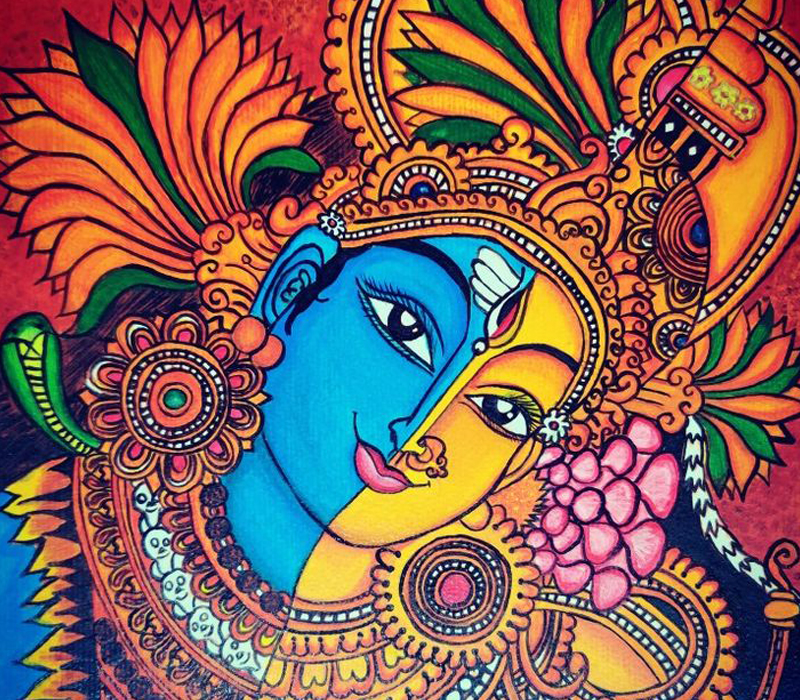
Bharatanatyam
Bharatanatyam , is a major genre of Indian classical dance that originated in Tamil Nadu.Traditionally, Bharatanatyam has been a solo dance that was performed exclusively by women, and it expressed South Indian religious themes and spiritual ideas. Bharatanatyam style is noted for its fixed upper torso, legs bent or knees flexed out combined with spectacular footwork, a sophisticated vocabulary of sign language based on gestures of hands, eyes and face muscles. The dance is accompanied by music and a singer, and typically her guru is present as the director and conductor of the performance and art. The dance has traditionally been a form of an interpretive narration of mythical legends and spiritual ideas from the Hindu texts.] The performance repertoire of Bharatanatyam, like other classical dances, includes nrita (pure dance), nritya (solo expressive dance) and natya (group dramatic dance).

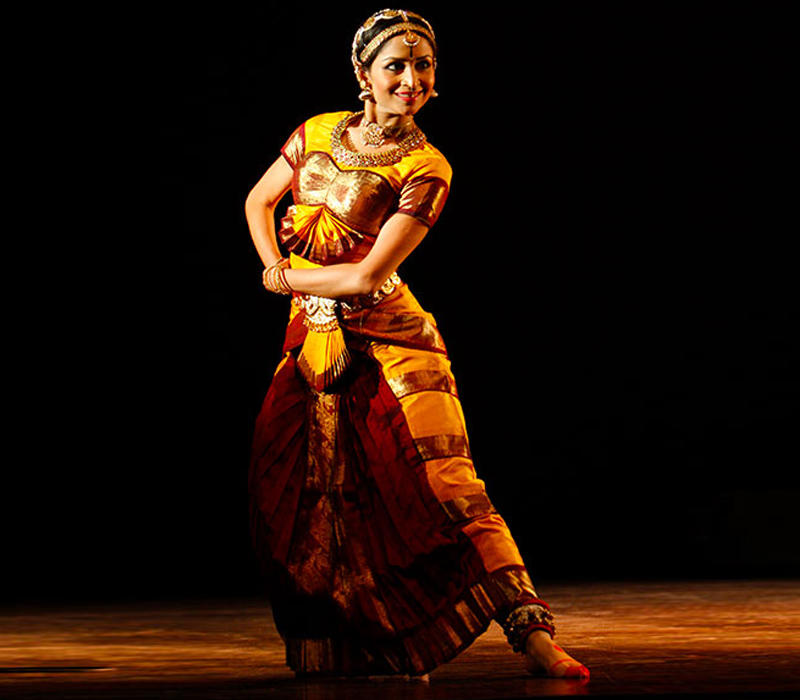
Kuchipudi
Kuchipudi is one of the classical styles of Indian dance. Around the third and fourth decade of this century it emerged out of a long rich tradition of dance-drama of the same name. In fact, Kuchipudi is the name of a village in the Krishna district of Andhra Pradesh. It is about 35 km. from Vijayawada. Andhra has a very long tradition of dance-drama which was known under the generic name of Yakshagaana. In 17th century Kuchipudi style of Yakshagaana was conceived by Siddhendra Yogi a talented Vaishnava poet and visionary who had the capacity to give concrete shape to some of his visions. He was steeped in the literary Yakshagaana tradition being guided by his guru Teerthanaaraayana Yogi who composed the Krishna-Leelatarangini. a kaavya in Sanskrit.
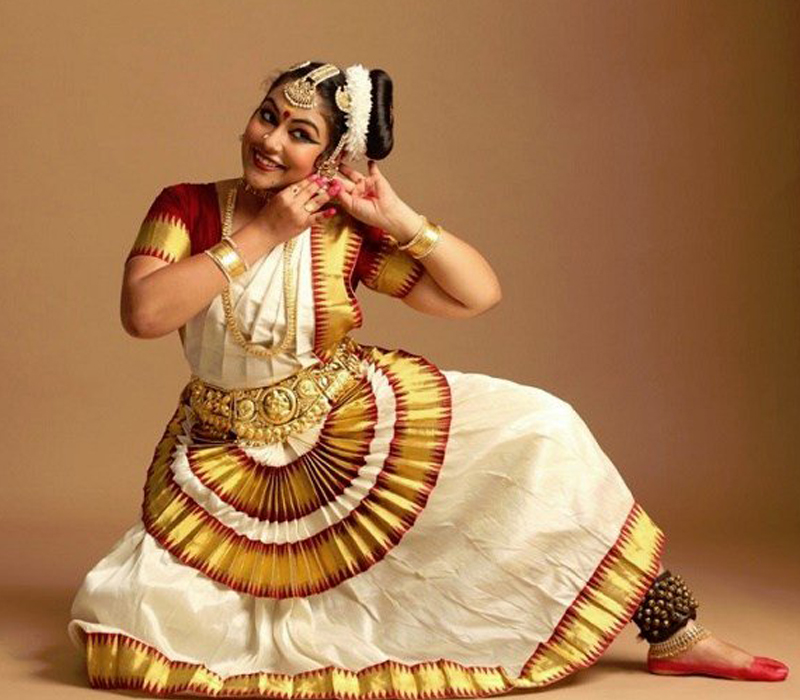
Mohiniyattam
Mohiniyattam, also spelled Mohiniattam, is one of two classical dances of India that developed and remain popular in the state of Kerala.The other classical dance form from Kerala is Kathakali.Mohiniyattam dance gets its name from the word Mohini – a mythical enchantress avatar of the Hindu god Vishnu, who helps the good prevail over evil by deploying her feminine powers.
Mohiniyattam’s roots, like all classical Indian dances, are in the Natya Shastra – the ancient Hindu Sanskrit text on performance arts. However, it follows the Lasya style described in Natya Shastra, that is a dance which is delicate, eros-filled and feminine. It is traditionally a solo dance performed by women after extensive training. The repertoire of Mohiniyattam includes music in the Carnatic style, singing and acting a play through the dance, where the recitation may be either by a separate vocalist or the dancer herself. The song is typically in Tamil-Sanskrit hybrid called Manipravala.
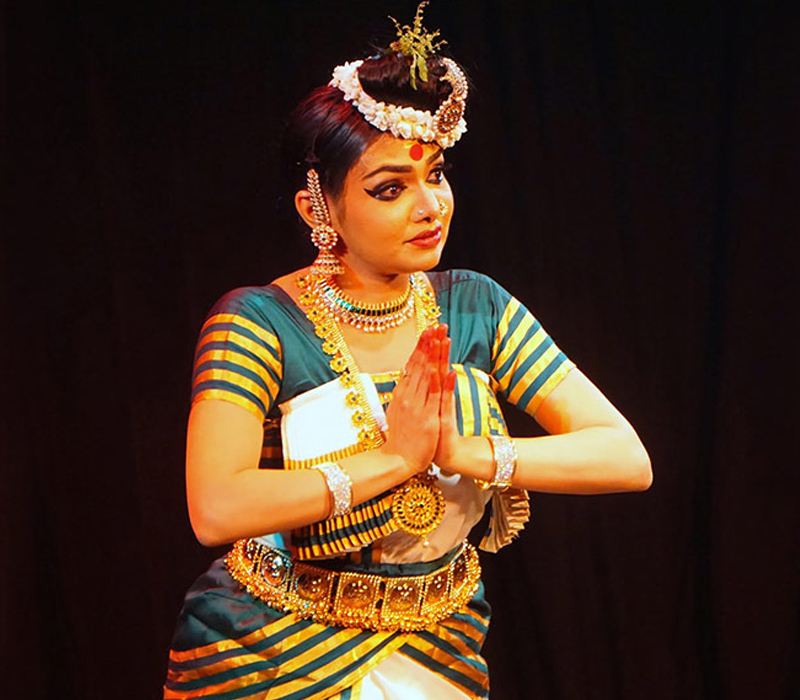
Kerala Nadanam
Kerala Natanam (Kerala Dance) is a new style of dance that is now recognised as a distinct art form evolved from Kathakali, a form of Indian dance-drama. The Indian dancer Guru Gopinath a well-trained Kathakali artist and his wife Thankamani Gopinath who was the first student of Mohiniyattam in Kerala Kalamandalam developed a unique structure for teaching and performing classical dance forms of India whose origins are from Kathakali. Solo, duets, dance dramas and traditional folk dances were the material they chose
Kathakali
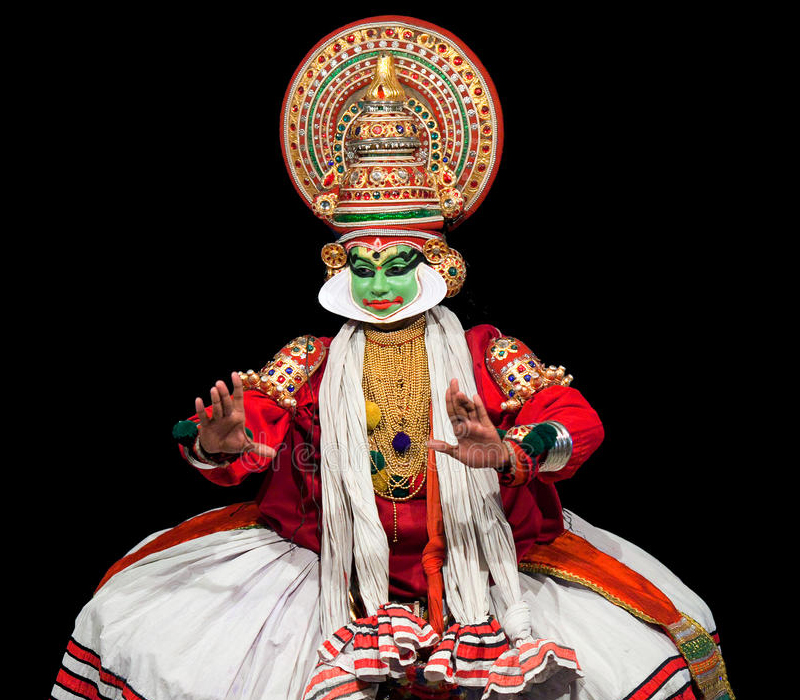
Kathakali is one of the major forms of classical Indian dance. It is a “story play” genre of art, but one distinguished by the elaborately colourful make-up, costumes and facemasks that the traditionally male actor-dancers wear. Kathakali primarily developed as a Hindu performance art in the Malayalam-speaking southwestern region of India (Kerala).
Folk Dances
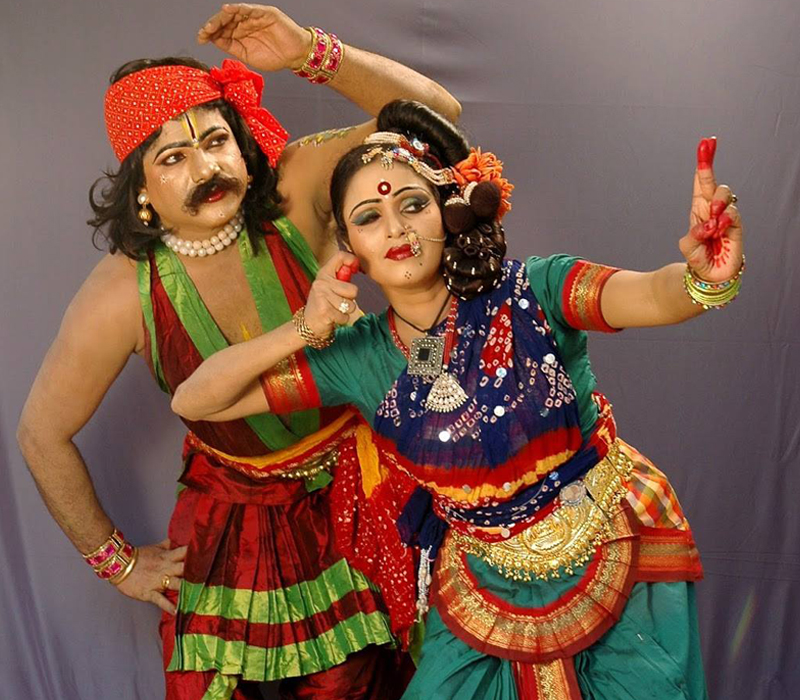
Kerala has a rich variety of folk dances. They are highly developed and reflect the temperaments and moods of the localities in music and costume. Nature silently and unobtrusively has moulded these dances just as the lives of the people who dance them. There are more than fifty well-known folk dances in Kerala. Of them the Kaliyattom, Mudiyettu, Kolam Thullal, Kolkali, Poorakkali, Velakali, Kamapadavukali, Kanniyarkali, Parichamuttukali, Thappukali, Kuravarkali and Thiruvathirakali are the most popular.
Painting & Drawing
We offer training for fine arts in Basic Techniques of painting and drawing using crayons, pencils, and all sortsnof colour mediums.